pre-ipo
Exited




SpaceX was founded in 2002 by Elon Musk and is headquartered in Hawthorne, California. The company's founding mission — to reduce the cost of space transportation and enable the colonization of Mars — has evolved into a multi-vertical aerospace and telecommunications enterprise spanning reusable launch vehicles, satellite internet, government defense contracts, and next-generation deep-space systems.
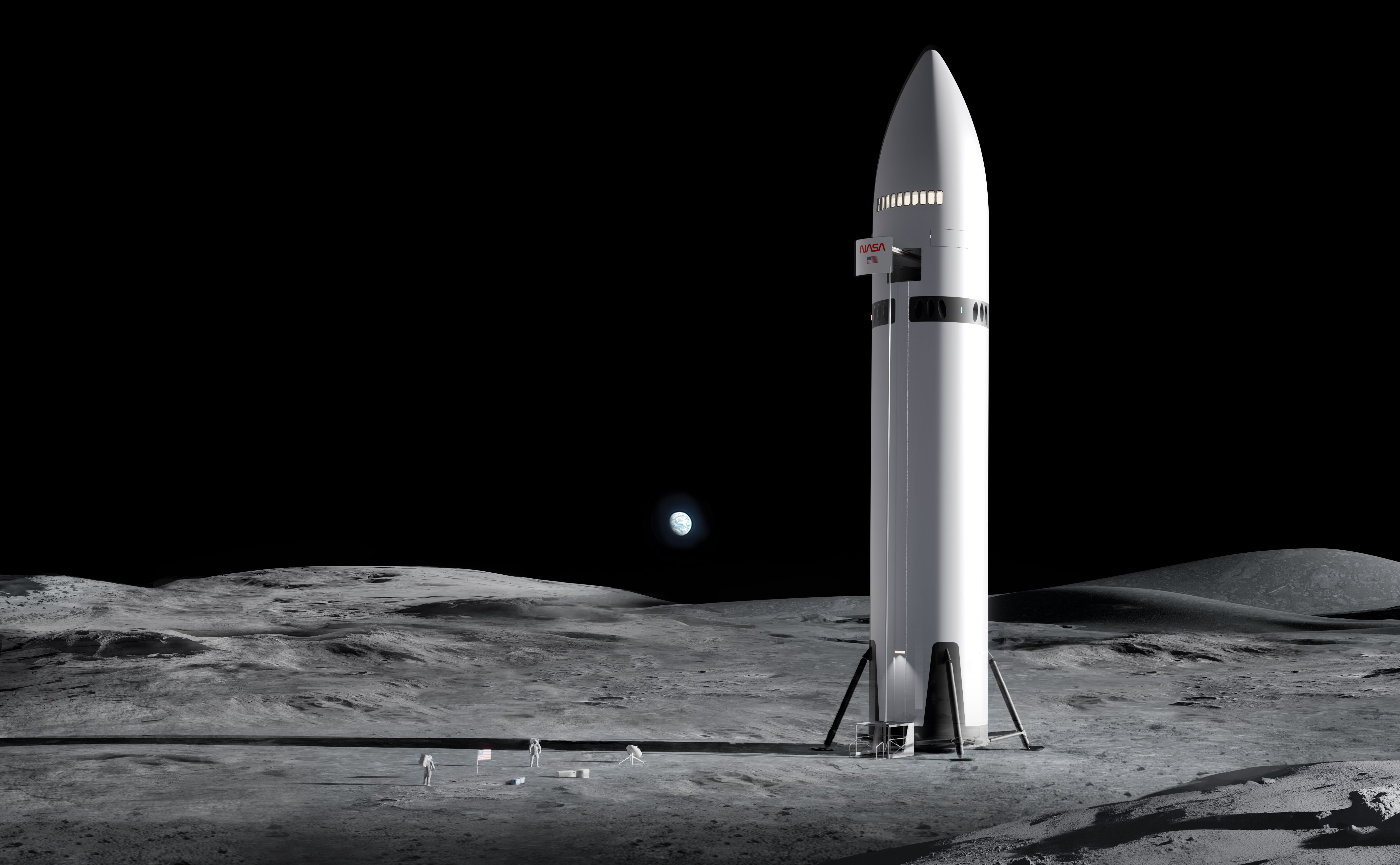
SpaceX pioneered orbital-class rocket reusability with Falcon 9, which now dominates the global commercial launch market with approximately 75% market share. Falcon Heavy serves high-energy orbit and national security missions. The company's Starship program — the largest and most powerful rocket ever built — completed 11 flight tests through 2025, with a new Version 3 design expected to debut in 2026 targeting orbital capability and in-space propellant transfer demonstrations critical to NASA's Artemis Human Landing System.
Starlink, SpaceX's satellite broadband constellation, has become the company's dominant revenue engine and the primary catalyst behind a potential $2 trillion+ IPO. The service operates nearly 9,500 active satellites in low Earth orbit and has surpassed 10 million subscribers globally, making it the fastest-growing telecom network in history.
SpaceX has transformed from a launch-services specialist into a vertically integrated aerospace and telecommunications conglomerate. The company reported approximately $15–16 billion in total 2025 revenue with EBITDA of roughly $8 billion.
Starlink generated approximately $11.4 billion of that total, with a 63% adjusted EBITDA margin — making it the only profitable business segment under SpaceX and the foundation of the company's IPO valuation thesis. Starlink's 2025 subscriber base exceeded 10 million active customers across 100+ countries, with the service adding more than 4.6 million new subscribers during the year alone. Average revenue per user sits at approximately $2,000 annually for residential customers, with maritime ($34,000 ARPU) and aviation ($300,000 ARPU) verticals commanding significant premiums.
Maritime revenue is projected to contribute $1.9 billion in 2026 (up 55% YoY), while the government-focused Starshield division — contracted by the U.S. Department of Defense through 2027 via a $537 million deal — is expected to reach $3.2 billion in revenue by 2026. Analyst estimates for Starlink's 2026 total revenue range from $15 billion to $20 billion depending on subscriber growth assumptions.
On the launch side, SpaceX secured a $5.9 billion Pentagon contract for 28 national security launch missions through 2029 under the Space Force's Phase 3 NSSL program. The Space Force assigned 7 FY25 missions to SpaceX valued at $845.8 million. Commercial launches contribute approximately $3.5 billion annually across Falcon 9 (~$62M per launch) and Falcon Heavy (~$125M per launch) missions.
SpaceX confidentially filed its S-1 with the SEC on April 1, 2026, targeting a Nasdaq listing at a valuation above $2 trillion. Morgan Stanley — whose veteran dealmaker Michael Grimes rejoined specifically to position for this listing — Goldman Sachs, and JPMorgan are competing for lead underwriting roles. If completed, the IPO could raise up to $75 billion, more than double Saudi Aramco's $29 billion 2019 record. ARK Invest, which holds SpaceX as its largest Venture Fund position at 17% of net assets, has published research supporting a $1.75 trillion base case.
SpaceX is approaching a transformational period as it prepares for one of the largest IPOs in history while simultaneously scaling Starlink, advancing Starship, and integrating xAI. Recent developments include:
SpaceX files confidential S-1 with the SEC, targeting $2T+ Nasdaq listing with 21 banks lined up for the offering (April 2026)
SpaceX is led by founder Elon Musk, who serves as CEO and chief engineer, driving both the company's long-term Mars colonization vision and its near-term commercial strategy. Gwynne Shotwell, President and COO since 2008, oversees day-to-day operations, commercial launch sales, and government relations — widely credited as the operational backbone that scaled SpaceX from a startup to the world's dominant launch provider. CFO Bret Johnsen, who confirmed IPO preparations in a December 2025 employee memo, manages the company's financial strategy and capital markets positioning ahead of the anticipated public offering.
The broader leadership team includes veterans across propulsion engineering, satellite systems, and aerospace manufacturing, with approximately 14,000 employees across facilities in Hawthorne (CA), McGregor (TX), Starbase (Boca Chica, TX), Cape Canaveral (FL), Redmond (WA), and multiple Starlink ground station locations worldwide.
Fidelity Investments, Andreessen Horowitz, Sequoia Capital, Founders Fund, Google (Alphabet), Baillie Gifford, CoreNest, Intesa Sanpaolo, IHC (Abu Dhabi), Stack Capital Group, and others across 240+ institutional investors and 5 angel investors including Ron Baron. SpaceX has raised a total of approximately $11.9 billion over 31 funding rounds.
Starlink has grown from 10,000 beta users in 2021 to over 10 million active subscribers by early 2026, expanding into 35 additional countries, territories, and markets during 2025 alone. The constellation now operates nearly 9,500 active satellites, with Gen2 satellites adding direct-to-cell capability for T-Mobile subscribers and inter-satellite laser links enabling global coverage without ground station dependencies.
Revenue trajectory: $1.4 billion (2022) → $4.2 billion (2023) → $7.7 billion (2024, +83% YoY) → $11.4 billion (2025). Recurring service fees account for nearly 80% of Starlink revenue. Key growth drivers include residential subscriber expansion (still at just 0.2% market penetration), maritime fleet deployments (including Carnival Cruises fleet-wide internet), aviation partnerships (United Airlines, Hawaiian Airlines offering free in-flight WiFi), and the Starshield government/defense vertical.
Starlink tested a "mini laser" in August 2025 to allow connectivity for third-party satellites and space stations, and is reportedly a front-runner for the U.S. Golden Dome missile defense system involving space-based weapons platforms.
SpaceX has raised approximately $11.9 billion over 31 funding rounds since its founding in 2002. Key milestones include the $1.9 billion Series J in August 2020 (the largest single round), multiple late-stage rounds through 2023-2025, and the December 2025 insider share sale at $421/share establishing an approximately $800 billion valuation. The company conducted a stock repurchase program of up to $2.56 billion alongside the December 2025 share sale.
With the anticipated IPO targeting a valuation above $2 trillion and a potential raise of up to $75 billion, SpaceX is positioned for one of the largest public offerings in history. The capital is expected to fund up to 1 million AI data-center satellites, Starship development, and Starlink Gen2 constellation buildout.
Q: How can I invest in SpaceX before the IPO?
A: SpaceX shares are currently available through pre-IPO brokers and private secondary market platforms for accredited investors. The company filed a confidential S-1 with the SEC in April 2026 and is targeting a Nasdaq listing at a valuation above $2 trillion, potentially as early as June 2026. Access typically requires accredited investor status and meeting minimum investment thresholds, which vary by platform.
Q: What is SpaceX's current valuation?
A: SpaceX's most recent private valuation was approximately $800 billion, established during a December 2025 insider share sale at $421 per share. The company is targeting a public listing at a valuation above $2 trillion. ARK Invest has published research supporting a $1.75 trillion base case, noting that at roughly 95x trailing revenue, the IPO price would reflect Starlink's adoption curve, Starship's cost trajectory, and the orbital compute thesis together.
Q: What does SpaceX's acquisition of xAI mean for investors?
A: In February 2026, SpaceX acquired xAI in an all-stock transaction, making Elon Musk's AI company a wholly owned subsidiary. This means investing in SpaceX now also provides exposure to Grok (xAI's AI chatbot with an estimated 60 million monthly active users), the Colossus supercomputer (555,000+ GPUs), and the X social media platform (600 million MAU, $2.26 billion in advertising revenue). xAI was independently valued at $230 billion prior to the acquisition.
Q: What are the key risks to a SpaceX investment?
A: Key risks include IPO timing and valuation uncertainty, Starship development delays that could affect NASA Artemis contracts, regulatory challenges (FAA launch licensing, spectrum allocation), Starlink's capital-intensive satellite replacement cycle, integration complexity from the xAI acquisition, competitive threats from Amazon's Project Kuiper and OneWeb, and Elon Musk's controlling voting structure which limits public shareholder influence. Additionally, xAI faces ongoing regulatory investigations in the EU, UK, and several Asian markets related to content safety.



%201%20(1).png)